
Trusted Advisorship: The Ultimate Force Multiplier in B2B Sales
Updated: Sep 20
By Michael Nash, Founder of Sage Sales Consulting

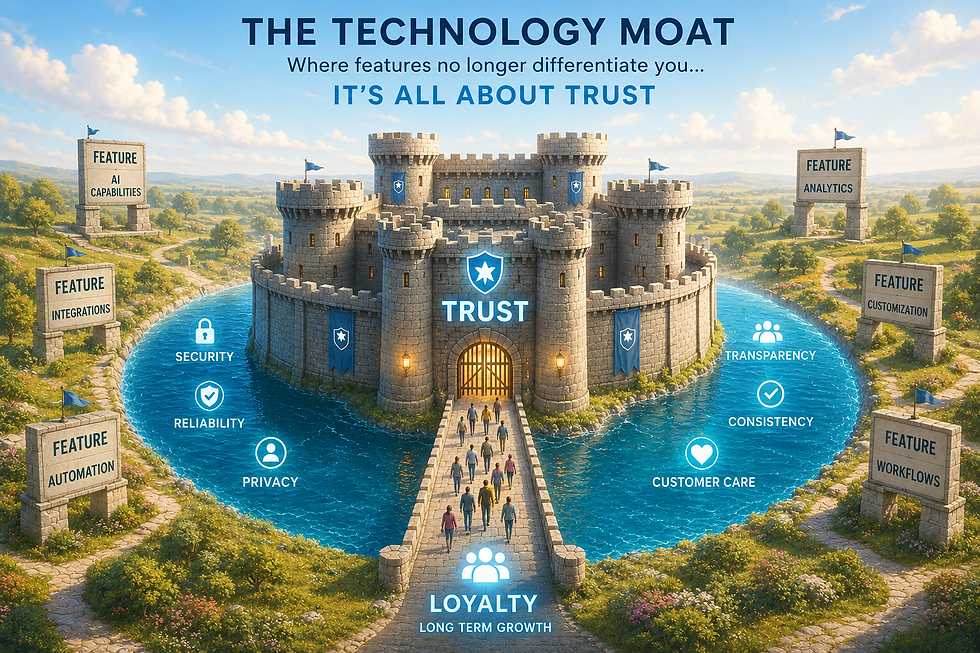
Most sales leaders treat trust like an intangible "soft skill." It isn't. In enterprise B2B sales, trust is an operational engine. When embedded into a structured framework, trust stops being an abstract feeling and starts driving tangible, measurable pipeline metrics.
Here is what happens when you treat trust as a force multiplier:
1. Win Rates Rise Above the Feature War
Buyers rarely purchase the "best" technical solution on paper, they buy from the team they trust not to get them fired. Trust neutralizes perceived career risk and gives executives conviction that post-signature value will actually materialize.
2. Deal Velocity Accelerates
Skeptical buyers drag cycles into endless security, legal, and financial scrutiny. Trust eliminates this "trust tax." When champions believe your proof points rather than stress-testing every variable in an ROI calculator, redundant diligence collapses and sales cycles compress.
3. Deal Size Expands (ASP)
Feature-selling forces margin compression because features commoditize quickly. Trusted advisors sell change management and strategic business outcomes. This pivots the conversation from an operational expense to an executive-level investment.
4. Expansion Becomes the Default (NRR)
Vendors get squeezed on renewal pricing; trusted advisors get invited into annual strategic planning. Becoming an indispensable partner makes you the default choice for upsells, cross-sells, and land-and-expand revenue.
5. Forecasting Becomes Defensible
"Sage-level" relationships yield access to the unvarnished truth:
The When: The hard business milestone dictating the timeline.
The Who: Direct access to decision-makers, influencers, and detractors.
The What: The actual validation criteria needed to get the contract signed.
When buyers stop hiding their cards, speculation leaves the forecast.
The Shift: From Pitching to Co-Authoring
You don't earn trusted advisorship by optimizing a 45-slide product demo. It requires replacing standard pitching with Conversational Engagement Intelligence, a deliberate approach that protects Buyer Agency. When prospects feel they are in control rather than being managed through a rigid sales process, they drop their defense mechanisms. They open up about real internal bottlenecks, political dynamics, and budget constraints. Stop pushing software. Give buyers the psychological safety to tell the truth, and start co-authoring the solution with them.
What is the single biggest factor causing buyers to ghost your reps right now: feature overload, lack of urgency, or a deficit of trust?


Comments